 Khounsub Travel
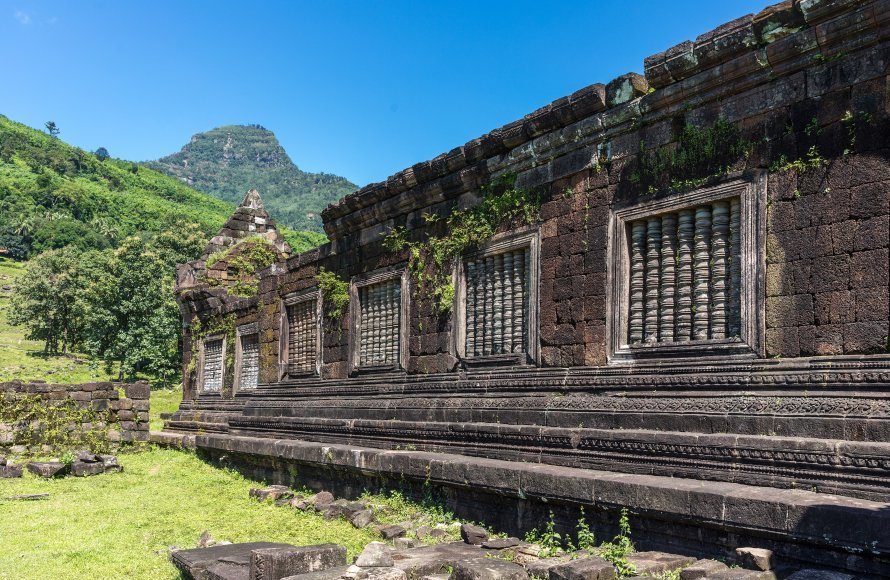
Wat Phou—meaning "temple mountain"—is not merely a collection of ancient stones. It is a place where nature and spirituality have been intertwined for over a thousand years, where the power of the Khmer Empire once extended its reach, and where visitors today can experience the profound stillness of a UNESCO World Heritage site without the crowds of its more famous cousin, Angkor Wat .
A sacred landscape revealed: the significance of Wat Phou
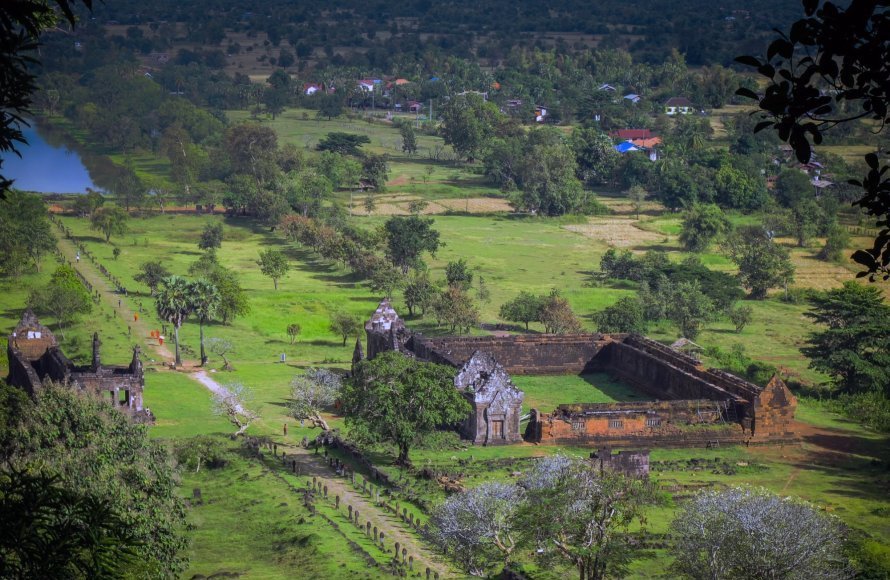
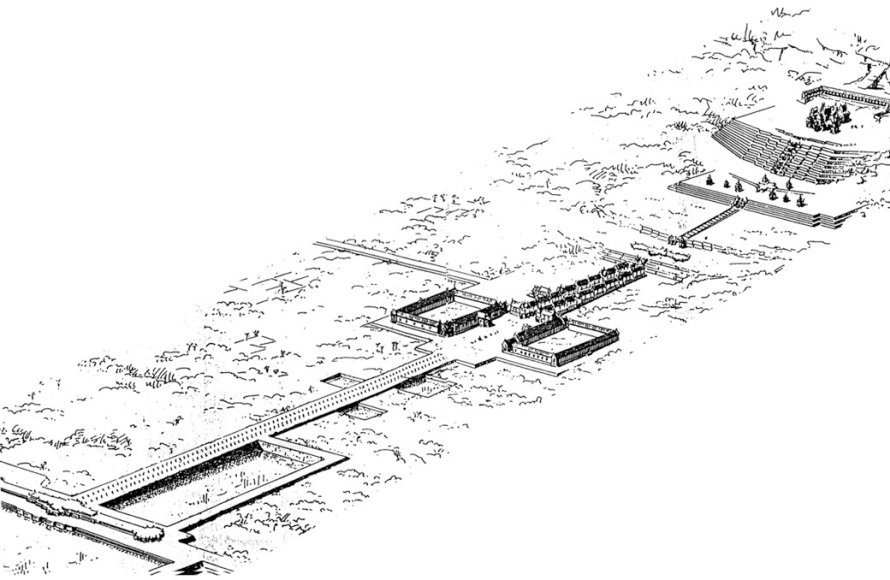
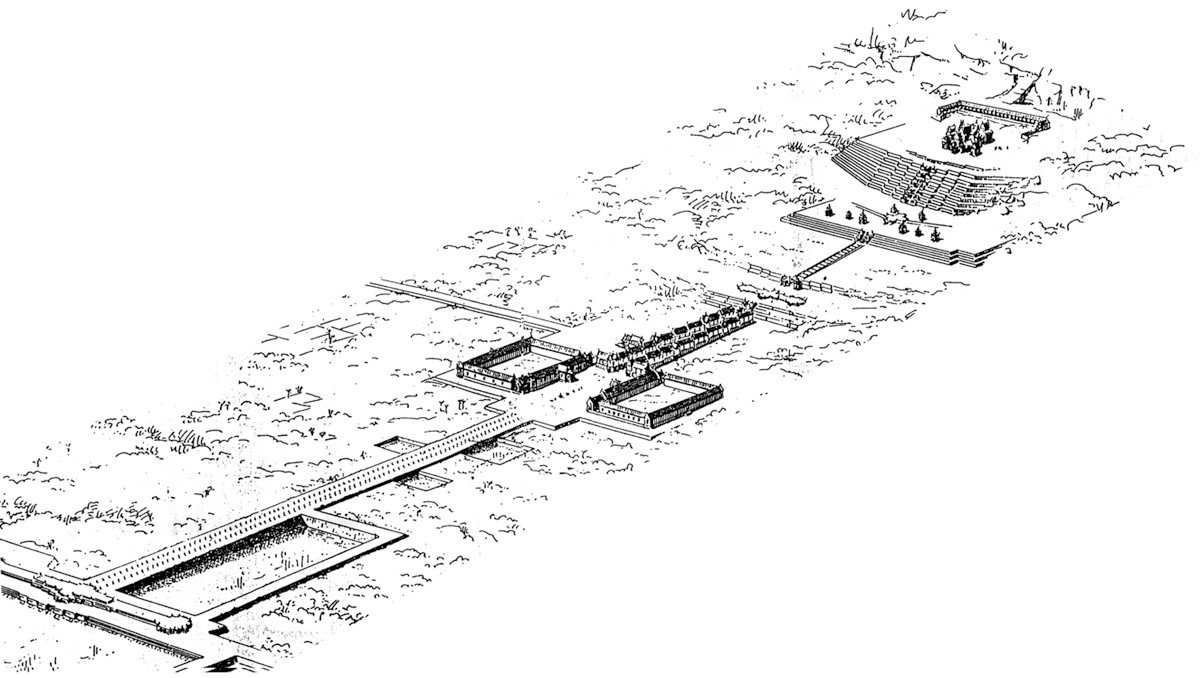
Wat Phou is far more than a single temple; it is the heart of the Champasak Cultural Landscape, a vast archaeological zone that was inscribed as a UNESCO World Heritage Site in 2001. What makes this site extraordinary is not just its age, but its profound relationship with the natural world. The temple complex was designed as a physical manifestation of the Hindu belief in the unity of heaven and earth. It is oriented along an axis stretching 1.4 kilometres from the Mekong River to the source of a sacred spring at the base of Mount Phou Khao, a mountain whose summit was revered for its natural lingam-shaped protuberance — a symbol of the god Shiva.
The area has been considered holy for millennia. Archaeological evidence suggests that as early as the 2nd century BCE, there were megalithic structures on the site, centred around a sacred spring and dedicated to local tutelary spirits. By the 5th century, the city of Shrestapura flourished on the banks of the Mekong, serving as the capital of a powerful kingdom that texts connect with both Chenla and Champa. This makes Wat Phou one of the oldest places of worship in South-east Asia, with a continuous spiritual history spanning nearly two thousand years.
The site’s significance grew under the Khmer Empire. It was integrated into the empire’s vast religious and political network at least as early as the reign of Yasovarman I in the 10th century. A remarkable feat of engineering and ambition, an ancient royal road once stretched over 200 kilometres from Wat Phou, connecting this provincial temple directly to the heart of the Khmer Empire at Angkor. For the traveller today, standing at Wat Phou is to stand at the wellspring of Khmer civilization, a place where the architectural and spiritual ideas that would later culminate in the grandeur of Angkor were first given shape.
The Temple on the Mountain: Architecture, Function, and the Lingam Cult
Approaching Wat Phou is a journey in itself. From the entrance, an electric cart transports visitors past a vast, rectangular baray (ceremonial reservoir) that still reflects the sky — a remnant of the sophisticated water management systems of the Khmer. The journey continues along a sandstone causeway, once a grand ceremonial promenade flanked by stone lotus buds and smaller barays that fill with lotus flowers during the rainy season.
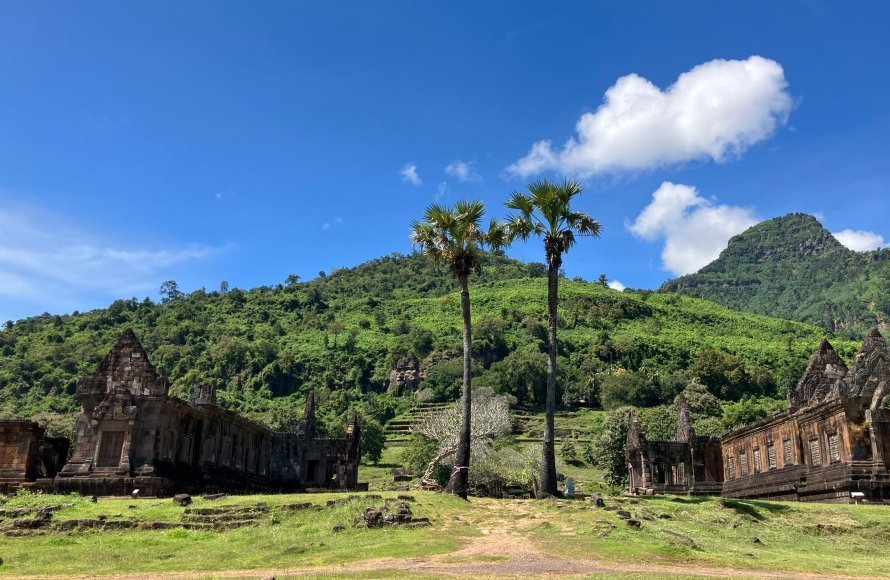
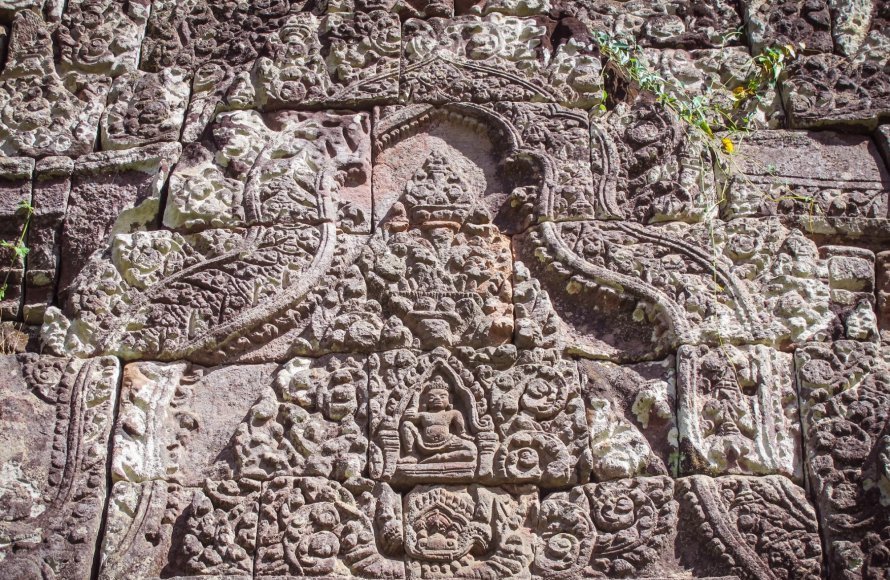
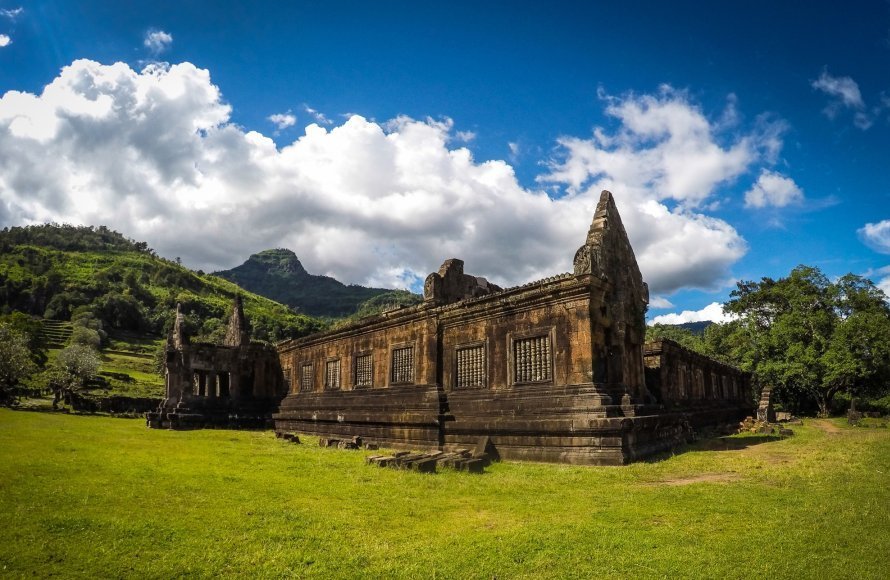
The middle level of the complex reveals two exquisitely carved buildings known as the "North and South Palaces". The term "palace" is a convention; their true purpose remains unknown, though their intricate pediments and lintels, carved with scenes from Hindu mythology, are masterpieces of Khmer art from the early Angkor Wat period. Nearby stands the "Nandi Hall", a long sandstone structure dedicated to Shiva’s sacred bull mount. It was from this very spot that the ancient road to Angkor once began its epic journey south.
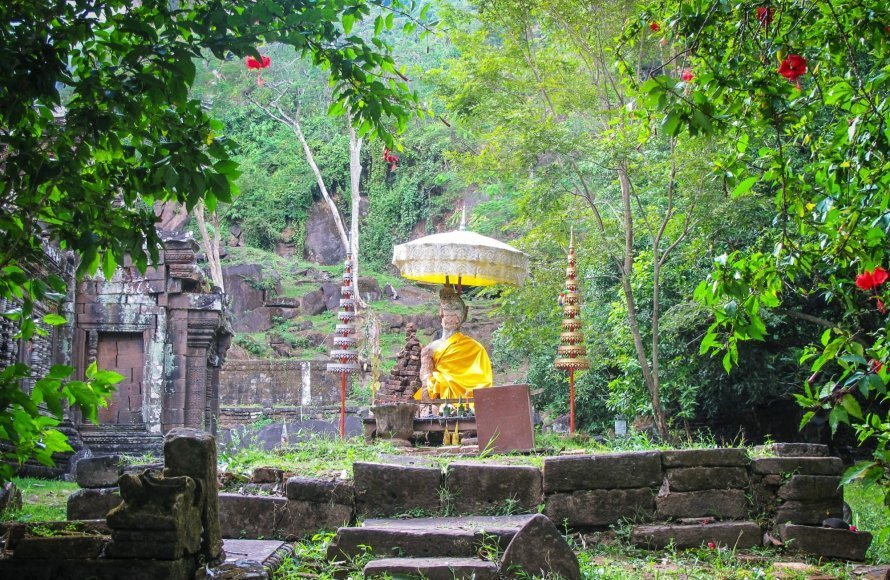
As visitors begin the ascent up the ancient stone staircases, shaded by fragrant Frangipani trees, the true genius of Wat Phou’s design unfolds. The path is punctuated by sacred markers, including a imposing "dvarapala" (sentinel figure) that has become a object of worship, believed by locals to be King Kammatha, the mythical builder of the temple. Further up, the remains of six small brick shrines, sadly damaged by treasure hunters, hint at the site’s once-crowded sanctity.
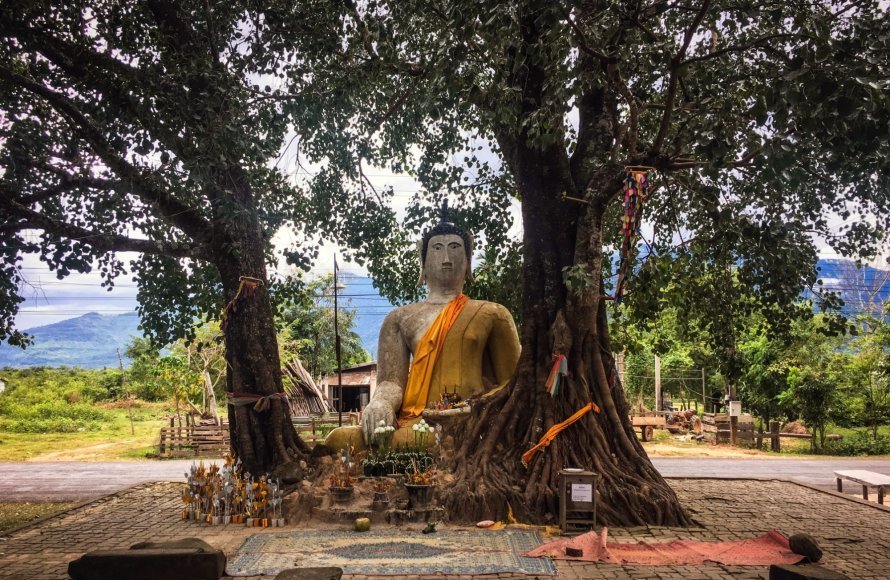
The culmination of the pilgrimage is the **upper sanctuary**, clinging to the cliff-side 100 meters above the plain. The view from here — over the barays, the Mekong, and the distant mountains — is breathtaking. The sanctuary itself is in two parts: a sandstone antechamber, now home to four Buddha images reflecting the site’s later conversion to Theravada Buddhism, and a brick rear cella that once housed the most sacred object of the temple: a stone Lingam representing Shiva. A sophisticated system of stone aqueducts channelled water from the sacred spring, which still flows from the cliff behind the temple, directly into the cella to bathe the lingam perpetually in its purifying waters. This continuous ritual, uniting the mountain, the spring, and the god, was the very purpose for which Wat Phou was built.
Scattered around the upper level are other intriguing features: a carving of the Hindu Trimurti (Brahma, Vishnu, and Shiva), a Buddha footprint etched into the cliff face, and the mysterious "Crocodile Stone" — a boulder carved into the shape of a reptile that some scholars link to ancient sacrificial rites described in 6th-century Chinese texts.
Conservation and Pilgrimage: A Living Heritage
Wat Phou is not a dead relic of the past; it is a living heritage site that continues to evolve. After decades of relative neglect, international conservation efforts have intensified since the 1990s. Projects led by UNESCO, the French Ministry of Foreign Affairs, the Italian Lerici Institute, and the Archaeological Survey of India have focused on stabilizing and restoring key structures like the Nandi Hall and the Northern Palace, ensuring that this masterpiece of Khmer architecture endures for future generations. For the visitor, this work is largely invisible, preserving the site’s romantic, "undiscovered" feel while ensuring safe access.
The Wat Phou Festival
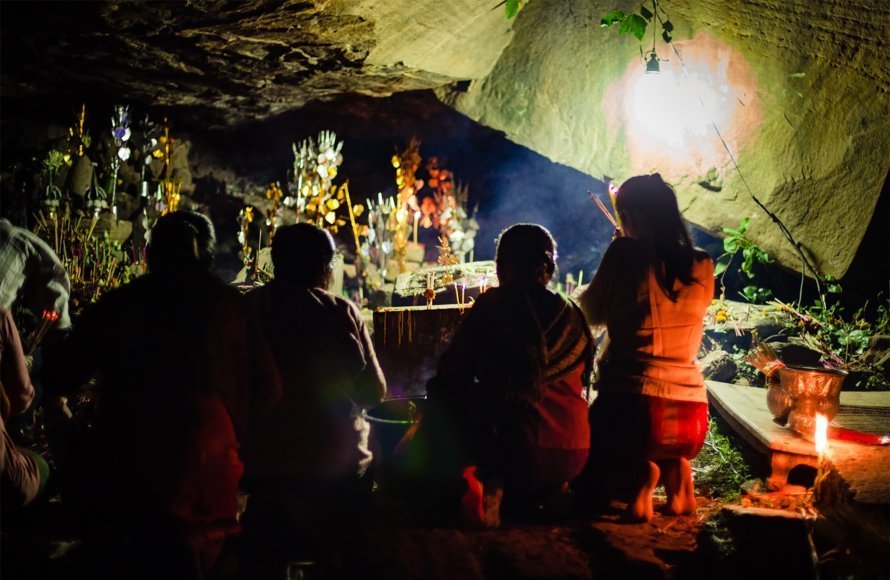
The spiritual life of Wat Phou is most vibrantly on display during the annual Wat Phou Festival (Boun Wat Phou Champasak). Held in February on the full moon of the third lunar month (Magha Puja), this three-day celebration transforms the temple grounds. Thousands of Lao pilgrims flock to the site to make merit and pay respect to the Buddha, their colourful processions and offerings breathing new life into the ancient stones. The festival is also a joyous cultural event, featuring traditional dance and music performances, games, and food stalls, offering visitors a rare glimpse into the living traditions that continue to honour this sacred place.